What's happened to Greil Marcus? Yes, I know many of you have been pondering this urgent question.
Marcus has had a long and distinguished career as an astute commentator on contemporary culture. Mystery Train was a groundbreaking book on the roots of American popular music, though its approach clearly owed a great deal to Leslie Fiedler's Love and Death in the American Novel. Much of what he's written on Dylan, especially, has been first-rate, if just barely this side of Bob-dolatry. His co-editing, with Werner Sollors, of A New Literary History of America, was inspired. And then of course there's his magnum opus on avant-garde modalities, The Lipstick of History. That book codified the Marcus style: a free-wheeling and exciting series of associations and vivid, if sometimes, problematic transhistorical leaps poised halfway between New Journalism and more sober scholarly analysis. It was refreshing, even galvanizing, writing: culture critique at its most enthusiastically incisive and an enormous pleasure to read. In retrospect, though, it may also have marked the beginning of his style's decay into mannerism.
Before I go on, I should note that re-reading Mystery Train inspired me to place Lorene Niedecker alongside the blues of Bessie Smith and Robert Johnson. The Marcus method at work!
Marcus belongs to a certain generation of writers that heralded an exciting moment in American music journalism. They were part of the larger vanguard, riding the shockwave rippling out from Mailer, Didion, Wolfe, and Thompson. I associate him with writers like Peter Guralnick, Paul Nelson, Robert Christgau, Lester Bangs, and Robert Palmer, to name a just a few: firebrands who rewrote the rules. Who said that pop music is culture and is here to stay, Roll over, Teddy Adorno, while we borrow a few lines from Benjamin. Cue bewitched crossroads.
If Marcus is preeminent among this group as a critic, Guralnick strikes me as the most erudite and finally most penetrating. Marcus, in his brilliant "Presliad," elevated Elvis to the status of Serious Icon, but it was Gurlanick who gave us the thick description of The King in all his monstrous glory and heartbreaking banality. At the end of the day, though, I'll turn to Marcus first.
The source of my particular petty gripe about what Marcus has been doing lately stems from my having just completed his hugely disappointing 2002 book on The Manchurian Candidate for the usually excellent BFI film guide series. My initial thought was: who better to cover the terrain of this baroque masterpiece of pop anarchy? I'm afraid I must report that John Frankenheimer's crazy political allegory from 1962 has been poorly served here.
In the middle of this slim book, which includes a needless and lengthy plot synopsis, Marcus intones:
"Something -- something in the story, something in the times, in the interplay of various people caught up consciously in the story, and consciously, unconsciously or half-consciously in the times -- came together, with the challenges and warnings of John F. Kennedy's inaugural address still lodged in the hearts of those making the movie" (41).
This is the Marcusian pop-prophetic voice: flabby, self-indulgent prose that gestures vaguely at the main chance through invocation.
He returns to this theme in his conclusion: "What The Manchurian Candidate did prefigure -- what it acted out, what it played out, in advance -- was the state of mind that would accompany the assassinations that followed it" (75).
These stale New Journalistic tics -- the over-vaunted, valorized "Something;" the repetitive play on prefiguration -- is classic Marcus, working up a lather of rhetoric that substitutes exhortation for thinking and which invites the reader to share in intimate revelation; the pop critic as prophet. It "all" came together, man, in the 60s.
This book gives every indication of having been dashed off over a long weekend. Its method can be pretty much summed up like this: hey, I screened this film for these naive undergrads at Princeton; they had no idea what was going to hit them; plus, what's with that crazy dream sequence?
Dear Greil, you might want to look into something called montage. And while you're at it, a smattering of gender theory would not go amiss either. But don't stop there. Check out Jameson's ideas on the political unconscious. I know it's "theory," but it actually would help think through some of the problems the film poses. The book's conceptual weaknesses and its woeful inattention to matters of form are patched over by its chronological jumps (probably sold to the editor as innovative, but really just intellectually empty).
Marcus on The Manchurian Candidate is an embarrassing sentimental journey; a nostalgia piece about the movies of his youth -- and the domestic thrills of the Cold War -- filled with lazy, gratuitous references to the measure of all things, Dylan. The final gambit of the decaying Marcus style, I suppose, would be to read all of Western history and literature through specific lyrics from Dylan like some kind of deranged autodidactic savant. Or, come to think of it, like Harold Bloom shellacking the canon with Shakespeare.
For a critic, nothing is sadder than being a herald of a moment that's already passed.
Charles River

Upper Limit Cloud/Lower Limit Sail
Saturday, March 3, 2012


Saturday, February 4, 2012
Torture Garden: Naked City Pastorelles – Mark Scroggins
There’s an extraordinary excitement coursing through these new poems by Mark Scroggins. Electric with a kind of headlong internal enjambment & melodically stuttering parataxis (modernist spasms of ecstasy run face-first into moral entropy), they vibrate at a pitch where desire topples into the forbidden, the decayed, and the just plain nasty.
“Osaka Bondage”
Blind mouths pastoral suck bukkake
viscous splatter ablumenoid linseed fever
underpainted egg-white glazing ochre umber
common time waltz three-step coda
the smeared mayonnaise beaten yolk
do I look strange kidnapped
precipitous tropic rushed silent end.
This is the only poem I know of to make such cunning use of the perverse practice of bukkake. Or any use, for that matter. Reader, do not dwell on it. Or, if you must, reflect on the term’s circulation vis-à-vis Facebook’s recent public offering. As the narrator of the classic noir, Naked City, entones at the end of the film: “There are eight million stories in the naked city. This has been one of them.”

Torture Garden takes its unsavory name from a book of the same title I’m not likely ever to read, Octave Mirabeau’s kinky, savage satire on fin de siècle ethics. Formally, though, the poems take their cue from Zukofsky’s magnificent 80 Flowers – using 7 lines per poem rather than 8. But they're more than a gesture of homage from LZ's biographer; these poems stand wildly and entirely on their own as late modernist vignettes of metropolitan shock, snarling with polyglot street-smarts.
But if the profane gets plenty of bandwidth, the sacred is not neglected either, especially in a small run of poems dedicated to Michael Heller, Norman Finkelstein, Joe Donahue, and Peter O’Leary, each of whom works in the vein of a gnostic cum sacramental poetics. This is “Cairo Chop Shop,” for Heller:
Celebrated the birdsong and updates
of the letter made free
textured cloth sewn-in weight lead
brass golden yod cubits
and myriads poised to rise gold-webbed
damask between Jerusalem and sever
Athens unshielded poised to rise.
Intricately woven and tensile with thick layerings, this poem nevertheless almost floats off the page. “Jersualem and sever/Athens unshielded” is an exquisite syntactical stroke that out-Oppens Oppen.
The “procedure” in Torture Garden involves mashing up the eight million; the book is lustrous with quotation and allusion, most of which are lost on me, I confess, though I was amused to find a poem using A.E. VanVogt’s classic SF novel about superhuman mutants, Slan, for its title. None of this feels forced or contrived – there’s a powerfully cohesive music in these truculent rhythms and oblique combinations. Put another way, it’s a display of brute force from end to end, all sheer velocity and collision, a strange new beauty emerging from the rejection of beauty, a poetics in which “thought experiment keeps the real.” I love these poems – they’re like fragments torn from the margins of Benjamin’s Arcades Projects, scenes from violent media landscape that are swarming yet oddly serene. Brimming with surprise and speed, and teeming with ghosts and weird echoes, they expand the dark horizons of language; baleful clouds racing above a city’s shadows.
“S&M Sniper”
I will tell it like
it is simple words training
the mind’s eye on water
sand sunlight the nipple astir
under cotton voyeur dancing webcam
hard northeast wind and premonitory
hints of snow zippers latex.
“Osaka Bondage”
Blind mouths pastoral suck bukkake
viscous splatter ablumenoid linseed fever
underpainted egg-white glazing ochre umber
common time waltz three-step coda
the smeared mayonnaise beaten yolk
do I look strange kidnapped
precipitous tropic rushed silent end.
This is the only poem I know of to make such cunning use of the perverse practice of bukkake. Or any use, for that matter. Reader, do not dwell on it. Or, if you must, reflect on the term’s circulation vis-à-vis Facebook’s recent public offering. As the narrator of the classic noir, Naked City, entones at the end of the film: “There are eight million stories in the naked city. This has been one of them.”

Torture Garden takes its unsavory name from a book of the same title I’m not likely ever to read, Octave Mirabeau’s kinky, savage satire on fin de siècle ethics. Formally, though, the poems take their cue from Zukofsky’s magnificent 80 Flowers – using 7 lines per poem rather than 8. But they're more than a gesture of homage from LZ's biographer; these poems stand wildly and entirely on their own as late modernist vignettes of metropolitan shock, snarling with polyglot street-smarts.
But if the profane gets plenty of bandwidth, the sacred is not neglected either, especially in a small run of poems dedicated to Michael Heller, Norman Finkelstein, Joe Donahue, and Peter O’Leary, each of whom works in the vein of a gnostic cum sacramental poetics. This is “Cairo Chop Shop,” for Heller:
Celebrated the birdsong and updates
of the letter made free
textured cloth sewn-in weight lead
brass golden yod cubits
and myriads poised to rise gold-webbed
damask between Jerusalem and sever
Athens unshielded poised to rise.
Intricately woven and tensile with thick layerings, this poem nevertheless almost floats off the page. “Jersualem and sever/Athens unshielded” is an exquisite syntactical stroke that out-Oppens Oppen.
The “procedure” in Torture Garden involves mashing up the eight million; the book is lustrous with quotation and allusion, most of which are lost on me, I confess, though I was amused to find a poem using A.E. VanVogt’s classic SF novel about superhuman mutants, Slan, for its title. None of this feels forced or contrived – there’s a powerfully cohesive music in these truculent rhythms and oblique combinations. Put another way, it’s a display of brute force from end to end, all sheer velocity and collision, a strange new beauty emerging from the rejection of beauty, a poetics in which “thought experiment keeps the real.” I love these poems – they’re like fragments torn from the margins of Benjamin’s Arcades Projects, scenes from violent media landscape that are swarming yet oddly serene. Brimming with surprise and speed, and teeming with ghosts and weird echoes, they expand the dark horizons of language; baleful clouds racing above a city’s shadows.
“S&M Sniper”
I will tell it like
it is simple words training
the mind’s eye on water
sand sunlight the nipple astir
under cotton voyeur dancing webcam
hard northeast wind and premonitory
hints of snow zippers latex.
On Leave: A Book of Anecdotes
Keith Tuma's amazing new book, On Leave: A Book of Anecdotes, is just out from Salt. More than a collection of random tales, it's also a daybook, a meditation on the role of the anecdote in literary criticism, and some first rate readings of a wealth of great poems. It's brilliant and impossible to put down.

Besides recounting numerous anecdotes, delightful in themselves, about literary figures, Tuma provides a useful history of the genre and its study, while formulating a theory that tries to account for the vital role of the extra-literary in criticism. It's less a method, though, than a style; Hugh Kenner figures as one of its great exemplars.
The anecdote strand is counterpointed by two others. The first is an intermittent daybook of public and private events modeled after Hannah Weiner's Weeks. Here's a brief sample:
"Cubs off for the day; talk of recession follows talk of housing slump. Gonzales quits. A white bag of finch food hanging out back blows in the wind. One can't be bewildered forever; eventually you're just a clod of unknowing."
Tuma's wit is delightful and these passages prove every bit as enthralling as the classic anecdotes woven throughout. The practice of the daybook here becomes less about the recounting of events, then the flow of experience through language.
Tuma's peregrinations while on leave from Miami University, Ohio, form the second strand. Among these are his trip in 2008 to Orono, where we bumped into each other and he described the project to me. (Our hotel rooms were adjacent and I remember coming back from a panel and hailing Keith and Tom Raworth as they enjoyed an afternoon drink on the measly patio that opened out on to the parking lot. I was in too much of a conference funk to join them, though).

Then there are the anecdotes. Tuma has a fresh and easy way with them; indeed the whole book reads like a lark. There's the oft told classic of Jeremy Prynne and Tom Pickard's dust up at Sparty Lea, which I first heard from Ric Caddell in Durham. (Or was it Peter Quartermain in Boulder?) And another one about Alan Golding singing up a storm at Orono in 2000, well into the wee hours. I was at that party, too, matching drinks with Mark Scroggins, David Bromige, George Bowering, Linda Russo, and Tom Orange. It was my first big conference and I thought, if this is academic life, I want more of it. Of course, I suffered from a massive hangover all the next day.

And there's this, a recounting of a story told by Alan Shapiro (anecdotes are nothing if not promiscuously transmissible) that's a barbed allegory of the writing life almost too good to be true:
"Marvin Bell and Mark Strand walk into a Barnes and Noble and head over to the poetry section. Bell looks at the books shelved under B, Strand at the books shelved under S. There's not a book by either poet in the store. 'I guess they don't carry my books here,' Bell says. 'Mine are sold out,' says Strand."

Besides recounting numerous anecdotes, delightful in themselves, about literary figures, Tuma provides a useful history of the genre and its study, while formulating a theory that tries to account for the vital role of the extra-literary in criticism. It's less a method, though, than a style; Hugh Kenner figures as one of its great exemplars.
The anecdote strand is counterpointed by two others. The first is an intermittent daybook of public and private events modeled after Hannah Weiner's Weeks. Here's a brief sample:
"Cubs off for the day; talk of recession follows talk of housing slump. Gonzales quits. A white bag of finch food hanging out back blows in the wind. One can't be bewildered forever; eventually you're just a clod of unknowing."
Tuma's wit is delightful and these passages prove every bit as enthralling as the classic anecdotes woven throughout. The practice of the daybook here becomes less about the recounting of events, then the flow of experience through language.
Tuma's peregrinations while on leave from Miami University, Ohio, form the second strand. Among these are his trip in 2008 to Orono, where we bumped into each other and he described the project to me. (Our hotel rooms were adjacent and I remember coming back from a panel and hailing Keith and Tom Raworth as they enjoyed an afternoon drink on the measly patio that opened out on to the parking lot. I was in too much of a conference funk to join them, though).

Then there are the anecdotes. Tuma has a fresh and easy way with them; indeed the whole book reads like a lark. There's the oft told classic of Jeremy Prynne and Tom Pickard's dust up at Sparty Lea, which I first heard from Ric Caddell in Durham. (Or was it Peter Quartermain in Boulder?) And another one about Alan Golding singing up a storm at Orono in 2000, well into the wee hours. I was at that party, too, matching drinks with Mark Scroggins, David Bromige, George Bowering, Linda Russo, and Tom Orange. It was my first big conference and I thought, if this is academic life, I want more of it. Of course, I suffered from a massive hangover all the next day.

And there's this, a recounting of a story told by Alan Shapiro (anecdotes are nothing if not promiscuously transmissible) that's a barbed allegory of the writing life almost too good to be true:
"Marvin Bell and Mark Strand walk into a Barnes and Noble and head over to the poetry section. Bell looks at the books shelved under B, Strand at the books shelved under S. There's not a book by either poet in the store. 'I guess they don't carry my books here,' Bell says. 'Mine are sold out,' says Strand."
Saturday, January 28, 2012
Linda Oppen at Harvard
Last October, I had the great pleasure of hosting a panel discussion at Harvard on George Oppen with his daughter, Linda, his Eagle Island friends, Bob and Helene Quinn, and Rachel Blau DuPlessis. You can now view the event in its entirety on You Tube.
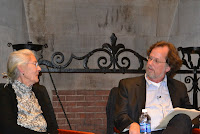
In addition, a separate interview, conducted by Columbia professor and oral historian Gerry Albarelli, can be heard on the Woodberry Poetry Room's website.
None of it would have been possible without the vision, passion, and extraordinary commitment of the Woodberry's Curator, Christina Davis. Scholars and lovers of Oppen's poetry owe her a great debt of gratitude.

In addition, a separate interview, conducted by Columbia professor and oral historian Gerry Albarelli, can be heard on the Woodberry Poetry Room's website.
None of it would have been possible without the vision, passion, and extraordinary commitment of the Woodberry's Curator, Christina Davis. Scholars and lovers of Oppen's poetry owe her a great debt of gratitude.
Tuesday, January 24, 2012
Core Samples from the World
Forrest Gander's remarkable new book, Core Sample from the World, has just been nominated for the National Book Critics Circle award. Gander, who studied geology as as an undergrad, makes sharp use of the idea of a core sample by shifting it from the vertical to the horizontal axis. Yet the book drills deep into the stratigraphy of the global human.

I've never studied with Forrest but he's been an extraordinarily generous supporter of my work, the kind that every poet dreams of. People revere him, and rightly so. Friends and colleagues who've worked with him, like Anna Deeny, Raul Zurita's translator, and Teresa Villa-Ignacio, whose powerful work on Edmond Jabes and Rosmarie Waldrop benefited from his eye, sing his praises. I think Peter O'Leary put it best when he said to me, "I'd take a poetic bullet for this guy." So would I. This nomination is richly deserved.
Here's what I wrote about Core Samples for Steve Evans' Attention Span 2011.
Forrest Gander | Core Samples from the World | New Directions | 2011
An itinerary of otherness, strewn with uncanny moments of tenderness and glancing blows that crack the fragility of conscience. The earth’s alien powder is sifted through, poured out, regathered in rich pulses of telluric current from the far side of everywhere. Poem, photo, and prose fold into and out of each other, remapping their own contours. The overlap and feedback amplifies into a kind of 21st Century global witness that is porous and humbling and strange. I can’t think of another book like it. Utterly extraordinary.

I've never studied with Forrest but he's been an extraordinarily generous supporter of my work, the kind that every poet dreams of. People revere him, and rightly so. Friends and colleagues who've worked with him, like Anna Deeny, Raul Zurita's translator, and Teresa Villa-Ignacio, whose powerful work on Edmond Jabes and Rosmarie Waldrop benefited from his eye, sing his praises. I think Peter O'Leary put it best when he said to me, "I'd take a poetic bullet for this guy." So would I. This nomination is richly deserved.
Here's what I wrote about Core Samples for Steve Evans' Attention Span 2011.
Forrest Gander | Core Samples from the World | New Directions | 2011
An itinerary of otherness, strewn with uncanny moments of tenderness and glancing blows that crack the fragility of conscience. The earth’s alien powder is sifted through, poured out, regathered in rich pulses of telluric current from the far side of everywhere. Poem, photo, and prose fold into and out of each other, remapping their own contours. The overlap and feedback amplifies into a kind of 21st Century global witness that is porous and humbling and strange. I can’t think of another book like it. Utterly extraordinary.
Monday, January 9, 2012
"Peculiar Language" or, Tuning into Gnostic Frequencies
Samuel Taylor Coleridge on Wordsworth's "Descriptive Sketches"
Biographia Literaria, Chapter 4
"In the form, style, and manner of the whole poem, and in the structure of the particular lines and periods, there is an harshness and acerbity connected and combined with words and images all a-glow, which might recall those products of the vegetable world, where gorgeous blossoms rise out of a hard and thorny rind and shell, within which the rich fruit is elaborating. The language is not only peculiar and strong, but at times knotty and contorted, as by its own impatient strength; while the novelty and struggling crowd of images, acting in conjunction with the difficulties of the style, demands always a greater closeness of attention, than poetry,--at all events, than descriptive poetry--has a right to claim. It not seldom therefore justified the complaint of obscurity."
Biographia Literaria, Chapter 4
"In the form, style, and manner of the whole poem, and in the structure of the particular lines and periods, there is an harshness and acerbity connected and combined with words and images all a-glow, which might recall those products of the vegetable world, where gorgeous blossoms rise out of a hard and thorny rind and shell, within which the rich fruit is elaborating. The language is not only peculiar and strong, but at times knotty and contorted, as by its own impatient strength; while the novelty and struggling crowd of images, acting in conjunction with the difficulties of the style, demands always a greater closeness of attention, than poetry,--at all events, than descriptive poetry--has a right to claim. It not seldom therefore justified the complaint of obscurity."
Wednesday, January 4, 2012
A Poetics of Failure: On Paul Nelson, Walter Benjamin, Ross MacDonald & Basil Bunting
The heartbreaking season of job applications is now fading gracelessly from the sharpness of ignominy to mere disappointment. The season of breaking the soul in love with a word down to a fine, bitter dust. Of scholarship and bureaucracy. Of hope and the grind of midwinter, as Lowell says in one of his more maudlin poems. Or as Beckett writes, “Throes are the only trouble, I must be on my guard against throes.”
Somehow it puts me in mind of the legendary rock critic Paul Nelson who, after his prescient early success, became even more notable for his failure. Reading the reviews of the new book on his sad career, Everything is an Afterthought, I was reminded that I met him once, in 1991. I’d flown to New York to see Jay Cocks, who I was working with on his script for Kathryn Bigelow about Joan of Arc. Paul and Jay were in the middle of watching Robert Siodmak’s classic early noir, The Strange Affair of Uncle Harry (an amazing film which I highly recommend along with Siodmak’s The Killers and Criss-Cross, both with a young, wire-coiled intense Burt Lancaster).

In a hired town car, we set off for a destination that turned out to be The Bronx of all places. As we passed through the Burnt Over district. Jay pointed out where his buddy Brian DePalma shot scenes from "Bonfire of the Vanities." We turned down an improbably well-lit, nicely kept boulevard, Jay reassured me that, “for certain reasons, this is a very safe neighborhood.” It soon became apparent what those were. We disgorged at a pavilion of late modernist neon called Mario’s where we were greeted by a very wide man in a pink dinner jacket whose neck, I swear, was larger in circumference than my thigh. I’m not even sure he had a neck. He extended a huge pink paw which was surprisingly gentle as he ushered us in.
I don’t remember anything about the conversation that night. What Jay said. What Paul said. All I remember was being made to eat a lot of Italian food. I mean a lot a lot. More than anyone should be made to eat. And thinking that if I didn’t the sinister guy named Nick who had an evil grin would shove my lifeless body into a back alley dumpster. That was my evening with Paul Nelson.

I recall it now because in this season of my own defeat it’s instructive to contemplate his odd, willful withdrawal into a self-imposed exile from writing. After creating a name for himself with groundbreaking pieces for Rolling Stone and Crawdaddy he ended up clerking at a video store and died a pauper, having subsisted, apparently, on little more than cokes and cigarettes in his final years. It’s a sad story of self-destruction, though I can’t help but feel that David Hadju’s review in the Times is more than a bit smug even it as struggles to assert the value of Nelson’s work.
Nelson idolized some of my own pantheon figures: Peckinpah. Chandler. Ross MacDonald. But his life stands as a cautionary tale for writers who embrace a certain kind of fatalism. Perhaps Hadju has a point, after all. Who of us doesn’t recoil from the logic of extremity, no matter how weirdly it may beckon? In that most magical and haunted of books, Berlin Childhood around 1900, Walter Benjamin recalls how his childhood wish to get his fill of sleep was ironically granted as an adult. “I must have made that wish a thousand times, and later it actually came true. But it was a long time before I recognized its fulfillment in the fact that all my cherished hopes for a position and proper livelihood had been in vain.”

I sometimes think these are the saddest lines I’ve ever read. For if hope cannot set us free, what can?
Which leads me, roundabout, to the detective fiction of Ross MacDonald. A couple of summers ago, Jay Cocks urged me to read The Doomsters. I found it gripping, but also overly plotted to the point of garishness. Nevertheless, I was hooked by MacDonald’s dark way with a sentence. I’ve since read The Underground Man, The Goodbye Look and The Barbarous Coast. What at first I resisted in his byzantine contrivances I’ve now come to see as the singular mark of his spiritual critique.

MacDonald’s baroque plot structures are not simply elaborate arabesques spun out for the purposes of prolonging the reader’s pleasure. Their intricacy – the way they unfold, double-back, and loop around – maps out the floor plan for the haunted house of history. The mind’s cunning labyrinth of justifications and self-deceptions – among the innocent and the guilty alike (the distinction is slowly obliterated in each novel) – mirrors a larger pattern: the way all social networks – family, friends, business, the law – are implicated in each other’s traumas, as Cathy Caruth puts it. History is indeed what hurts, and while Archer may set right some small wrongs, in the end he has always arrived too late to do anything but bear tortured witness, offering hope, as Benjamin writes, only for those who have gone past it, the hopeless.
For if history is to be more than an unbroken pageant of triumphalism then it must, as both Benjamin and MacDonald knew, attest to the failures – to those who were crushed beneath the wheel, cast aside; spurned, neglected, forgotten, and abused. I once thought of writing my dissertation about the poetics of failure, taking up the examples of Oppen, Niedecker, Bunting, and John Wieners, with Beckett as a kind of happy Charon (though I could have drawn just as easily from the life of Delmore Schwartz – who reads him anymore, that burned out glory boy?). It seemed too depressing.
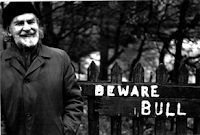
But now, in midwinter’s solar hiatus, when the sun is a brief blinding flare above the horizon, I’m haunted by Paul Nelson’s legacy of abandonment. I think of MacDonald’s grim, doom-chased characters and of Lew Archer stumbling doggedly after them, as if he could catch and break their fall. I think of Bunting’s “Briggflatts” and the ejection of Alexander by the Angel of Judgment from the peak of a mountain into the Northumbrian grass and the song of the slowworm. Failure re-configured as the occasion for coming into the riches of humility.
Somewhere Terry Eagelton writes: “the mortified landscape of history is redeemed. Not by being recuperated into spirit, but by being raised, so to speak, to the second power – converted into a formal repertoire, fashioned into certain enigmatic emblems which then hold the promise of knowledge and possession.”
Just as in Benjamin, where “the concept of progress must be grounded in the idea of catastrophe,” so the work of failure, like the work of mourning, is predicated on how traumatic loss is metabolized. Downfall produces rescue. And failure re-inscribes loss into the hermeneutical circle of self-possession: a re-reading that turns depletion into plenitude.
In “Briggflatts,” the poetics of failure transforms a fall from grace into a fall into grace. The expulsion from the violence of ambition leads to the welcome of Gelassenheit.
"But who will entune a bogged orchard,
its blossom gone,
fruit unformed, where hunger and
damp hush the hive?"
In other words, midwinter's counsel is to be secret, and exult.
Somehow it puts me in mind of the legendary rock critic Paul Nelson who, after his prescient early success, became even more notable for his failure. Reading the reviews of the new book on his sad career, Everything is an Afterthought, I was reminded that I met him once, in 1991. I’d flown to New York to see Jay Cocks, who I was working with on his script for Kathryn Bigelow about Joan of Arc. Paul and Jay were in the middle of watching Robert Siodmak’s classic early noir, The Strange Affair of Uncle Harry (an amazing film which I highly recommend along with Siodmak’s The Killers and Criss-Cross, both with a young, wire-coiled intense Burt Lancaster).

In a hired town car, we set off for a destination that turned out to be The Bronx of all places. As we passed through the Burnt Over district. Jay pointed out where his buddy Brian DePalma shot scenes from "Bonfire of the Vanities." We turned down an improbably well-lit, nicely kept boulevard, Jay reassured me that, “for certain reasons, this is a very safe neighborhood.” It soon became apparent what those were. We disgorged at a pavilion of late modernist neon called Mario’s where we were greeted by a very wide man in a pink dinner jacket whose neck, I swear, was larger in circumference than my thigh. I’m not even sure he had a neck. He extended a huge pink paw which was surprisingly gentle as he ushered us in.
I don’t remember anything about the conversation that night. What Jay said. What Paul said. All I remember was being made to eat a lot of Italian food. I mean a lot a lot. More than anyone should be made to eat. And thinking that if I didn’t the sinister guy named Nick who had an evil grin would shove my lifeless body into a back alley dumpster. That was my evening with Paul Nelson.

I recall it now because in this season of my own defeat it’s instructive to contemplate his odd, willful withdrawal into a self-imposed exile from writing. After creating a name for himself with groundbreaking pieces for Rolling Stone and Crawdaddy he ended up clerking at a video store and died a pauper, having subsisted, apparently, on little more than cokes and cigarettes in his final years. It’s a sad story of self-destruction, though I can’t help but feel that David Hadju’s review in the Times is more than a bit smug even it as struggles to assert the value of Nelson’s work.
Nelson idolized some of my own pantheon figures: Peckinpah. Chandler. Ross MacDonald. But his life stands as a cautionary tale for writers who embrace a certain kind of fatalism. Perhaps Hadju has a point, after all. Who of us doesn’t recoil from the logic of extremity, no matter how weirdly it may beckon? In that most magical and haunted of books, Berlin Childhood around 1900, Walter Benjamin recalls how his childhood wish to get his fill of sleep was ironically granted as an adult. “I must have made that wish a thousand times, and later it actually came true. But it was a long time before I recognized its fulfillment in the fact that all my cherished hopes for a position and proper livelihood had been in vain.”

I sometimes think these are the saddest lines I’ve ever read. For if hope cannot set us free, what can?
Which leads me, roundabout, to the detective fiction of Ross MacDonald. A couple of summers ago, Jay Cocks urged me to read The Doomsters. I found it gripping, but also overly plotted to the point of garishness. Nevertheless, I was hooked by MacDonald’s dark way with a sentence. I’ve since read The Underground Man, The Goodbye Look and The Barbarous Coast. What at first I resisted in his byzantine contrivances I’ve now come to see as the singular mark of his spiritual critique.

MacDonald’s baroque plot structures are not simply elaborate arabesques spun out for the purposes of prolonging the reader’s pleasure. Their intricacy – the way they unfold, double-back, and loop around – maps out the floor plan for the haunted house of history. The mind’s cunning labyrinth of justifications and self-deceptions – among the innocent and the guilty alike (the distinction is slowly obliterated in each novel) – mirrors a larger pattern: the way all social networks – family, friends, business, the law – are implicated in each other’s traumas, as Cathy Caruth puts it. History is indeed what hurts, and while Archer may set right some small wrongs, in the end he has always arrived too late to do anything but bear tortured witness, offering hope, as Benjamin writes, only for those who have gone past it, the hopeless.
For if history is to be more than an unbroken pageant of triumphalism then it must, as both Benjamin and MacDonald knew, attest to the failures – to those who were crushed beneath the wheel, cast aside; spurned, neglected, forgotten, and abused. I once thought of writing my dissertation about the poetics of failure, taking up the examples of Oppen, Niedecker, Bunting, and John Wieners, with Beckett as a kind of happy Charon (though I could have drawn just as easily from the life of Delmore Schwartz – who reads him anymore, that burned out glory boy?). It seemed too depressing.
But now, in midwinter’s solar hiatus, when the sun is a brief blinding flare above the horizon, I’m haunted by Paul Nelson’s legacy of abandonment. I think of MacDonald’s grim, doom-chased characters and of Lew Archer stumbling doggedly after them, as if he could catch and break their fall. I think of Bunting’s “Briggflatts” and the ejection of Alexander by the Angel of Judgment from the peak of a mountain into the Northumbrian grass and the song of the slowworm. Failure re-configured as the occasion for coming into the riches of humility.
Somewhere Terry Eagelton writes: “the mortified landscape of history is redeemed. Not by being recuperated into spirit, but by being raised, so to speak, to the second power – converted into a formal repertoire, fashioned into certain enigmatic emblems which then hold the promise of knowledge and possession.”
Just as in Benjamin, where “the concept of progress must be grounded in the idea of catastrophe,” so the work of failure, like the work of mourning, is predicated on how traumatic loss is metabolized. Downfall produces rescue. And failure re-inscribes loss into the hermeneutical circle of self-possession: a re-reading that turns depletion into plenitude.
In “Briggflatts,” the poetics of failure transforms a fall from grace into a fall into grace. The expulsion from the violence of ambition leads to the welcome of Gelassenheit.
"But who will entune a bogged orchard,
its blossom gone,
fruit unformed, where hunger and
damp hush the hive?"

In other words, midwinter's counsel is to be secret, and exult.
Subscribe to:
Posts (Atom)